
Advanced · story · Level 5 · 4:44
Advanced Spanish: Moses at the Sea
Watch this episode
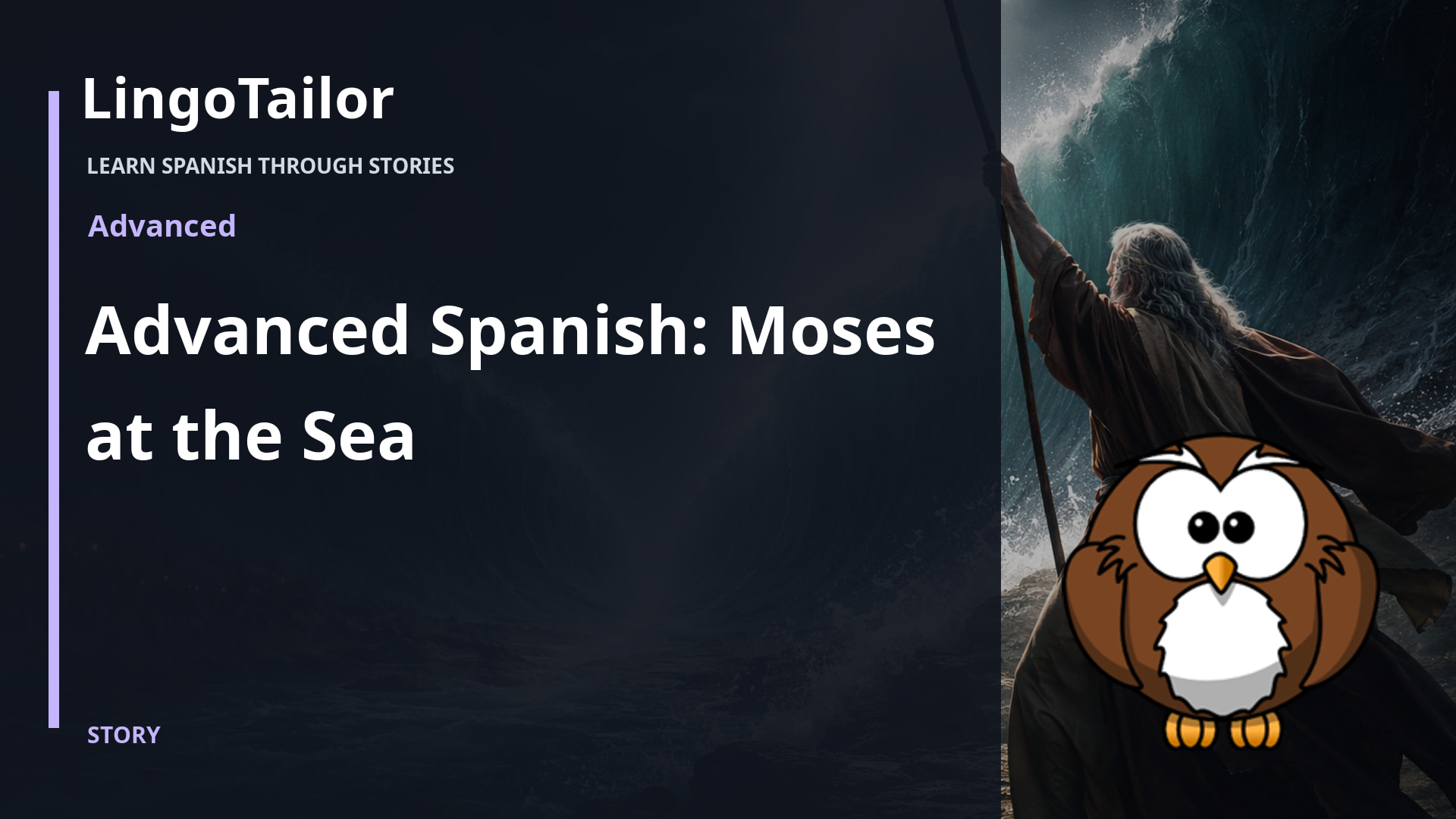
A traditional retelling based on Exodus 14, presented as a religious narrative rather than independently verified history. Learners encounter four reusable Spanish expressions for staying composed, finding a way forward, recognizing an irreversible moment, and describing an unexpected outcome.
Story context, sources & AI disclosure
A traditional retelling based on Exodus 14, presented as a religious narrative rather than independently verified history. Learners encounter four reusable Spanish expressions for staying composed, finding a way forward, recognizing an irreversible moment, and describing an unexpected outcome. Create your own personalized learning podcast Want a podcast built around your interests and learning needs? Sign up for LingoTailor and create a personalized podcast that evolves as you learn. Register at https://lingotailor.clipiti.com This episode uses AI-generated content and audio and was published automatically, without human review. Language explanations and factual content may contain mistakes.
Account required. A limited lifetime trial is available; your allowance is shown before generation.
Transcript & learning notes
Follow along, pause, and replay the Spanish passages.
EnglishWelcome to LingoTailor, where you learn Spanish through stories. First, you'll hear the story in English to understand the context. Then you'll hear it in Spanish, learn useful vocabulary, and listen to the Spanish story again. Today's story is: Moses at the Sea.
EnglishHere is the English version.
EnglishAccording to the traditional account in Exodus 14, Moses led the Israelites out of Egypt. Pharaoh changed his mind and pursued them with his army, trapping them between the soldiers and the sea. Fear spread through the camp, but Moses urged the people to remain calm and move forward. He raised his staff; the narrative says that a strong east wind divided the waters and exposed dry ground. The Israelites crossed between walls of water, while the Egyptians followed them. Once the last Israelites had reached the opposite shore, Moses stretched out his hand. The waters returned, overwhelming the pursuing army and ending the threat. The account portrays the resolution not as a military triumph achieved by force, but as deliverance in the face of apparent impossibility. Against all expectation, the people survived because they continued forward when retreat seemed to be their only option.
EnglishNow hear the same account in Spanish.
EspañolAhora, la versión en español.
EspañolSegún el relato tradicional de Éxodo 14, Moisés condujo a los israelitas fuera de Egipto. El faraón cambió de opinión y los persiguió con su ejército, dejándolos atrapados entre los soldados y el mar. El miedo se extendió por el campamento, pero Moisés pidió una sola cosa: mantener la calma y avanzar. Alzó su bastón; el relato dice que un fuerte viento del este dividió las aguas y dejó al descubierto un terreno seco. Los israelitas cruzaron entre muros de agua, mientras los egipcios los seguían. Cuando el último israelita llegó a la orilla opuesta, Moisés extendió la mano. Las aguas regresaron, cubrieron al ejército perseguidor y acabaron con la amenaza. El relato presenta la resolución no como un triunfo militar logrado por la fuerza, sino como una liberación ante una imposibilidad aparente. Contra todo pronóstico, el pueblo sobrevivió porque siguió adelante cuando retirarse parecía ser su única opción: no había vuelta atrás, y el mar terminó por abrir paso.
EnglishNext, we will examine four reusable expressions from the Spanish telling.
Españolmantener la calma
EnglishTo remain composed and avoid panic, especially in a stressful or dangerous situation.
EspañolAunque todos estaban preocupados, ella logró mantener la calma.
Españolno había vuelta atrás
EnglishThere was no possibility of returning to the previous situation or reversing the decision.
EspañolUna vez que presentamos la propuesta, supimos que no había vuelta atrás.
Españolabrir paso
EnglishTo create or find a route through an obstacle, either literally or figuratively.
EspañolEl equipo tuvo que abrir paso entre los árboles.
Españolcontra todo pronóstico
EnglishDespite what seemed likely or expected; contrary to the prediction.
EspañolContra todo pronóstico, el pequeño equipo ganó la final.
EnglishNow hear the Spanish version again.
EspañolSegún el relato tradicional de Éxodo 14, Moisés condujo a los israelitas fuera de Egipto. El faraón cambió de opinión y los persiguió con su ejército, dejándolos atrapados entre los soldados y el mar. El miedo se extendió por el campamento, pero Moisés pidió una sola cosa: mantener la calma y avanzar. Alzó su bastón; el relato dice que un fuerte viento del este dividió las aguas y dejó al descubierto un terreno seco. Los israelitas cruzaron entre muros de agua, mientras los egipcios los seguían. Cuando el último israelita llegó a la orilla opuesta, Moisés extendió la mano. Las aguas regresaron, cubrieron al ejército perseguidor y acabaron con la amenaza. El relato presenta la resolución no como un triunfo militar logrado por la fuerza, sino como una liberación ante una imposibilidad aparente. Contra todo pronóstico, el pueblo sobrevivió porque siguió adelante cuando retirarse parecía ser su única opción: no había vuelta atrás, y el mar terminó por abrir paso.
EnglishMake your learning personal with LingoTailor: podcasts adapted to your interests, level, and progress. Practice speaking with ChatGPT, get feedback, and shape your next episode. Follow the link in the description to get started. Subscribe now so you never miss a new episode. Don't just listen to a new language. Start speaking it.