
story · Level 5 · 5 min
Advanced Spanish: When Lightning Makes Glass
Watch this episode
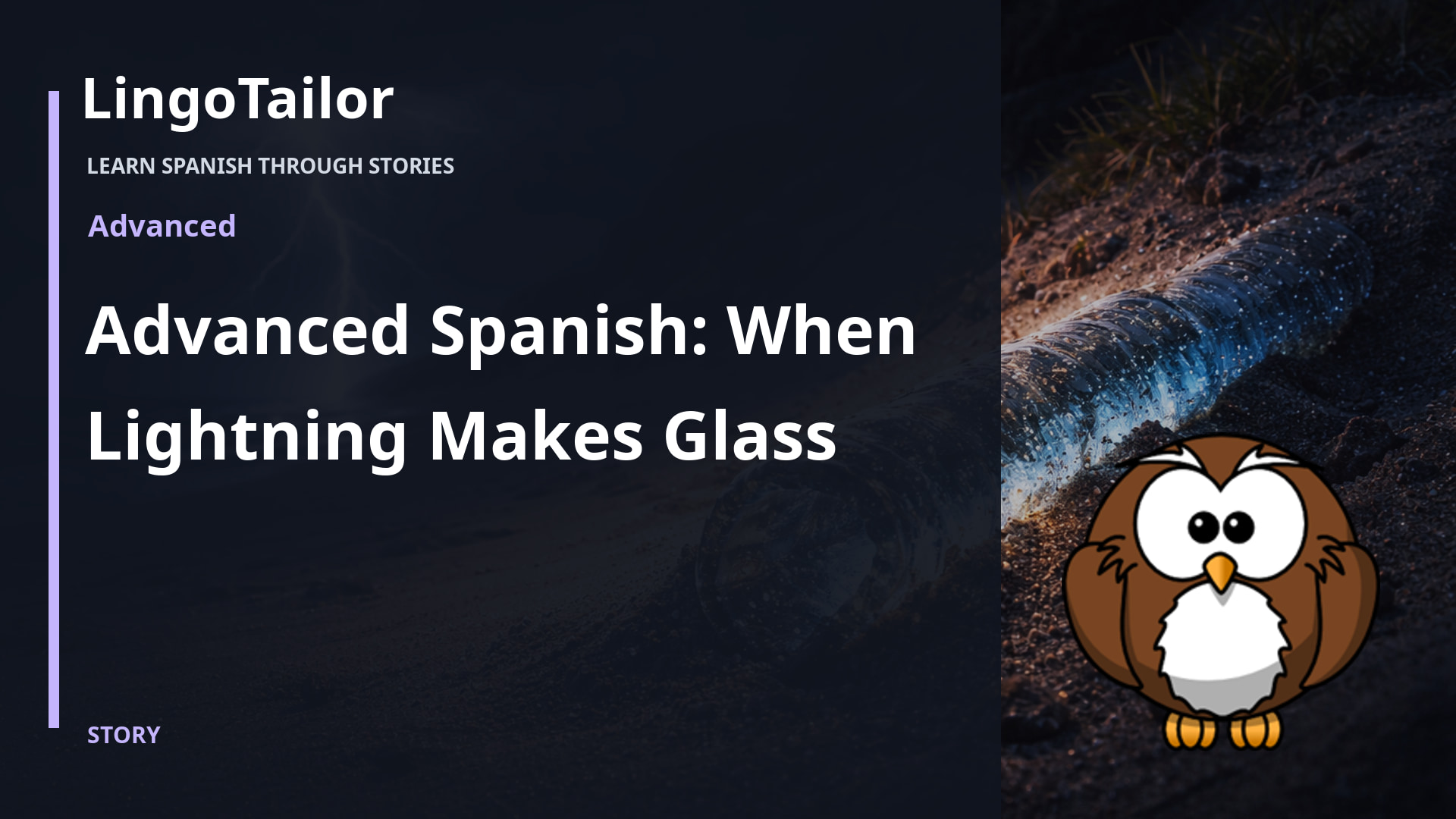
A factual explanation of how lightning striking silica-rich sand can produce a fulgurite: a fragile, often hollow glass structure. The lesson emphasizes localized melting, rapid cooling, temporary heat-based glow, and the difference between exposure by erosion and recent formation. Create your own personalized learning podcast Want a podcast built around your interests and learning needs? Sign up for LingoTailor and create a personalized podcast that evolves as you learn. Register at https://lingotailor.clipiti.com This episode uses AI-generated content and audio and was published automatically, without human review. Language explanations and factual content may contain mistakes.
Transcript & learning notes
Follow along, pause, and replay the Spanish passages.
EnglishWelcome to LingoTailor, where you learn Spanish through stories. First, you'll hear the story in English to understand the context. Then you'll hear it in Spanish, learn useful vocabulary, and listen to the Spanish story again. Today's story is: When Lightning Makes Glass.
EnglishEnglish Story
EnglishHow can lightning turn sand into glass? When a lightning bolt strikes silica-rich sand, the channel reaches extreme temperatures and melts particles in a fraction of a second. The molten material follows the discharge’s branching path; then it cools rapidly and forms a fulgurite, an often hollow and fragile glass tube that may remain buried. During formation, its surface can glow from the heat, but it does not retain that glow after cooling. Finding a fulgurite does not show that all the surrounding sand melted: the heating is highly localized. Erosion can expose the structure, although that does not mean the process happened recently. Lightning therefore does not manufacture a uniform glass object; it briefly transforms a narrow path through the sand and leaves behind a mineral trace of its discharge.
EnglishNow here is the same explanation in Spanish.
EspañolHistoria en español
Español¿Cómo puede un relámpago convertir arena en vidrio? Cuando un rayo descarga sobre arena rica en sílice, el canal alcanza temperaturas extremas y funde partículas en una fracción de segundo. El material fundido sigue el trayecto ramificado de la descarga; luego se enfría rápidamente y forma una fulgurita: un tubo de vidrio, a menudo hueco y frágil, que puede quedar enterrado. Durante la formación, la superficie puede brillar por el calor, pero no conserva ese resplandor después de enfriarse. Encontrar una fulgurita no demuestra que toda la arena circundante se haya fundido: el calentamiento es muy localizado. La erosión puede dejar al descubierto la estructura, aunque eso no significa que el proceso haya ocurrido recientemente. Así, el rayo no fabrica una pieza uniforme de vidrio; transforma brevemente un estrecho recorrido de arena y deja una huella mineral de su descarga.
EnglishLet us examine four reusable expressions from the Spanish version.
Españolen una fracción de segundo
EnglishThis emphasizes that something happens extremely quickly, in less than a full second.
EspañolEl hielo se derritió en una fracción de segundo al entrar en contacto con la superficie caliente.
Españolno significa que
EnglishThis introduces a qualification that prevents a reasonable observation from being treated as proof of a stronger conclusion.
EspañolVer una huella no significa que el animal siga cerca.
Españoldejar al descubierto
EnglishThis means to uncover or reveal something that was previously hidden, often through erosion, removal, or another gradual process.
EspañolLa erosión puede dejar al descubierto capas antiguas de roca.
Españolconvertir arena en vidrio
EnglishThis describes transforming sandy material into glass through intense heat; the pattern can also be adapted to other transformations.
EspañolUna temperatura extrema puede convertir arena en vidrio.
EnglishHere is the Spanish version again.
Español¿Cómo puede un relámpago convertir arena en vidrio? Cuando un rayo descarga sobre arena rica en sílice, el canal alcanza temperaturas extremas y funde partículas en una fracción de segundo. El material fundido sigue el trayecto ramificado de la descarga; luego se enfría rápidamente y forma una fulgurita: un tubo de vidrio, a menudo hueco y frágil, que puede quedar enterrado. Durante la formación, la superficie puede brillar por el calor, pero no conserva ese resplandor después de enfriarse. Encontrar una fulgurita no demuestra que toda la arena circundante se haya fundido: el calentamiento es muy localizado. La erosión puede dejar al descubierto la estructura, aunque eso no significa que el proceso haya ocurrido recientemente. Así, el rayo no fabrica una pieza uniforme de vidrio; transforma brevemente un estrecho recorrido de arena y deja una huella mineral de su descarga.
EnglishMake your learning personal with LingoTailor: podcasts adapted to your interests, level, and progress. Practice speaking with ChatGPT, get feedback, and shape your next episode. Follow the link in the description to get started. Subscribe now so you never miss a new episode. Don't just listen to a new language. Start speaking it.