
story · Level 5 · 6 min
Advanced Spanish: Athena and Poseidon Compete to Protect Athens
Watch this episode
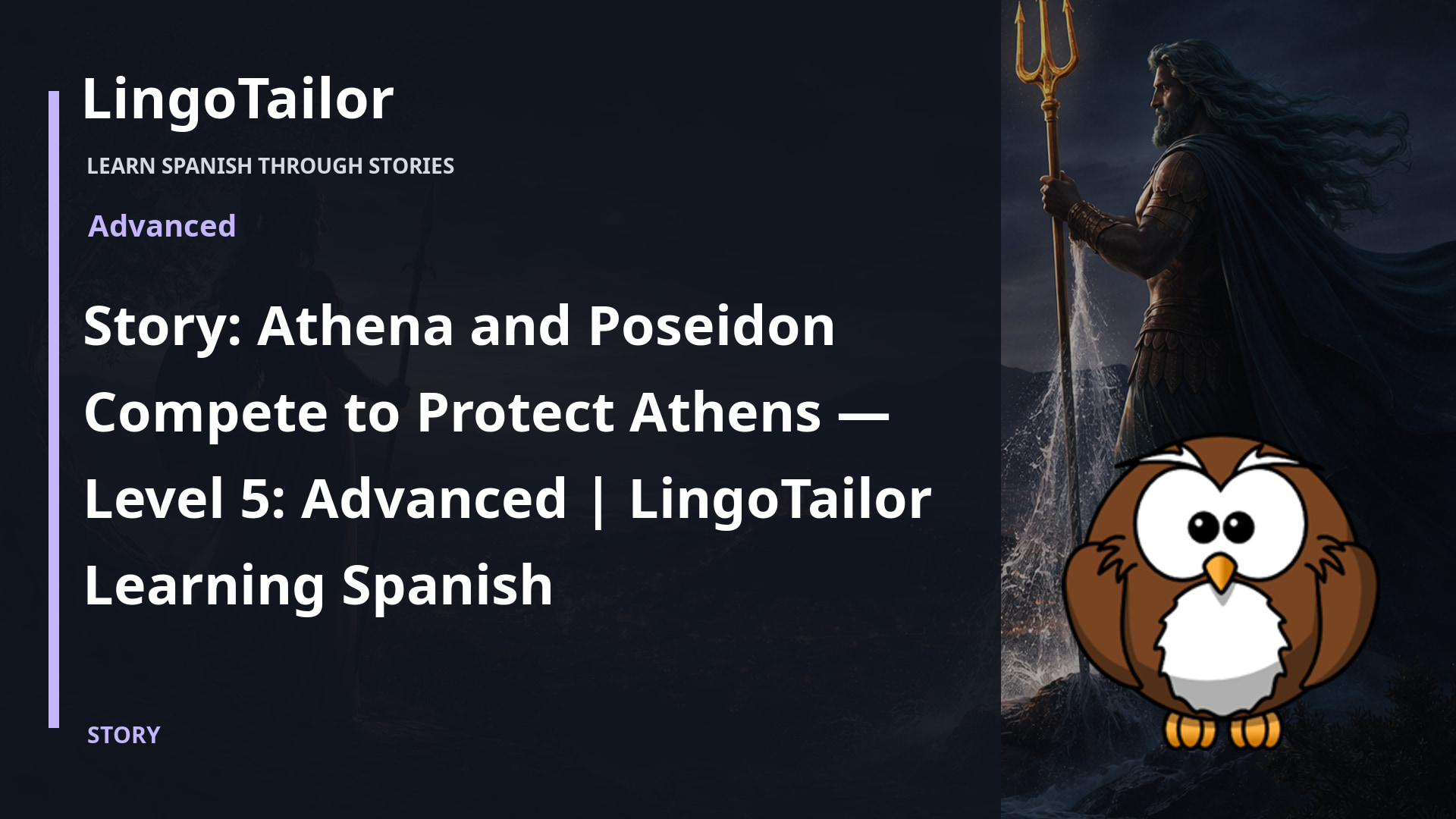
A traditional Greek myth about how Athena and Poseidon competed to become the protector of Athens, and how the citizens valued lasting usefulness over spectacle. Create your own personalized learning podcast Want a podcast built around your interests and learning needs? Sign up for LingoTailor and create a personalized podcast that evolves as you learn. Register at https://lingotailor.clipiti.com This episode uses AI-generated content and audio and was published automatically, without human review. Language explanations and factual content may contain mistakes.
Transcript & learning notes
Follow along, pause, and replay the Spanish passages.
EnglishWelcome to LingoTailor! Today's topic: Athena and Poseidon Compete to Protect Athens. Listen, learn useful expressions, and get ready to speak.
EnglishStory: Athena and Poseidon Compete to Protect Athens — Level 5: Advanced
EnglishIn a traditional Greek myth, Athena and Poseidon sought guardianship of a city in Attica. They agreed that each would offer a gift, and the citizens would judge which was more useful. Poseidon struck the ground with his trident; a spring appeared, but its water was salty and unsuitable for drinking. Athena planted an olive tree, promising renewable food, oil, wood, and trade opportunities over time. After weighing both gifts, the people chose Athena’s. Poseidon accepted the decision, though some versions describe his displeasure. The city took Athena’s name, Athens, and the olive became an emblem of peace, prosperity, and wise stewardship. This traditional story honors discernment over spectacle.
EnglishNow the lesson continues in Spanish.
EspañolHistoria: Atenea y Poseidón compiten por proteger Atenas — Nivel 5: Avanzado
EspañolSegún un mito tradicional griego, Atenea y Poseidón se disputaron la protección de una ciudad del Ática. Acordaron que cada uno ofrecería un don y los ciudadanos decidirían cuál sería más útil. Poseidón golpeó el suelo con su tridente; surgió un manantial, pero el agua era salada y no servía para beber. Atenea plantó un olivo y prometió una fuente renovable de alimento, aceite, madera y oportunidades comerciales a largo plazo. Tras sopesar las propuestas, el pueblo eligió la de Atenea. Poseidón aceptó la decisión, aunque algunas versiones dicen que se disgustó. La ciudad tomó el nombre de Atenas, y el olivo simbolizó paz, prosperidad y prudencia. El mito tradicional alaba el buen juicio por encima del espectáculo.
EnglishIt is time to review some useful vocabulary and expressions from the story.
Españolse disputaron
EnglishThis reflexive plural verb means that two or more people competed or contended with one another over something.
EspañolPor ejemplo, dos ciudades se disputaron el derecho a organizar el festival.
EspañolAcordaron que
EnglishThis expression introduces a mutual agreement and is useful for explaining the plan that follows.
EspañolPor ejemplo, acordaron que revisarían el contrato el lunes.
Españolcuál sería más útil
EnglishThis indirect question asks which option would be more useful, using the conditional to refer to a future choice from a past viewpoint.
EspañolPor ejemplo, discutimos cuál sería más útil para el equipo.
Españolno servía para beber
EnglishThis negative imperfect construction says that something was not suitable for drinking; the imperfect presents that as an ongoing condition.
EspañolPor ejemplo, el agua estaba contaminada y no servía para beber.
Española largo plazo
EnglishThis time expression refers to consequences, benefits, or plans considered over an extended period rather than immediately.
EspañolPor ejemplo, invertir en formación beneficia a la empresa a largo plazo.
EspañolTras sopesar
EnglishThis formal connective means after carefully weighing or considering several factors. The following noun phrase is what was evaluated.
EspañolPor ejemplo, tras sopesar los riesgos, aceptamos la propuesta.
Españolaceptó la decisión
EnglishThis phrase means that someone accepted the outcome that had been decided, even if the result was not necessarily their preference.
EspañolPor ejemplo, perdió la votación, pero aceptó la decisión.
EnglishNow listen to the complete story again in Spanish.
EspañolSegún un mito tradicional griego, Atenea y Poseidón se disputaron la protección de una ciudad del Ática. Acordaron que cada uno ofrecería un don y los ciudadanos decidirían cuál sería más útil. Poseidón golpeó el suelo con su tridente; surgió un manantial, pero el agua era salada y no servía para beber. Atenea plantó un olivo y prometió una fuente renovable de alimento, aceite, madera y oportunidades comerciales a largo plazo. Tras sopesar las propuestas, el pueblo eligió la de Atenea. Poseidón aceptó la decisión, aunque algunas versiones dicen que se disgustó. La ciudad tomó el nombre de Atenas, y el olivo simbolizó paz, prosperidad y prudencia. El mito tradicional alaba el buen juicio por encima del espectáculo.
EnglishMake your learning personal with LingoTailor: podcasts adapted to your interests, level, and progress. Practice speaking with ChatGPT, get feedback, and shape your next episode. Follow the link in the description to get started. Don't just listen to a new language. Start speaking it.