
Beginner · story · Level 1 · 4:18
Beginner Spanish: A Strong Web Before Rain
Watch this episode
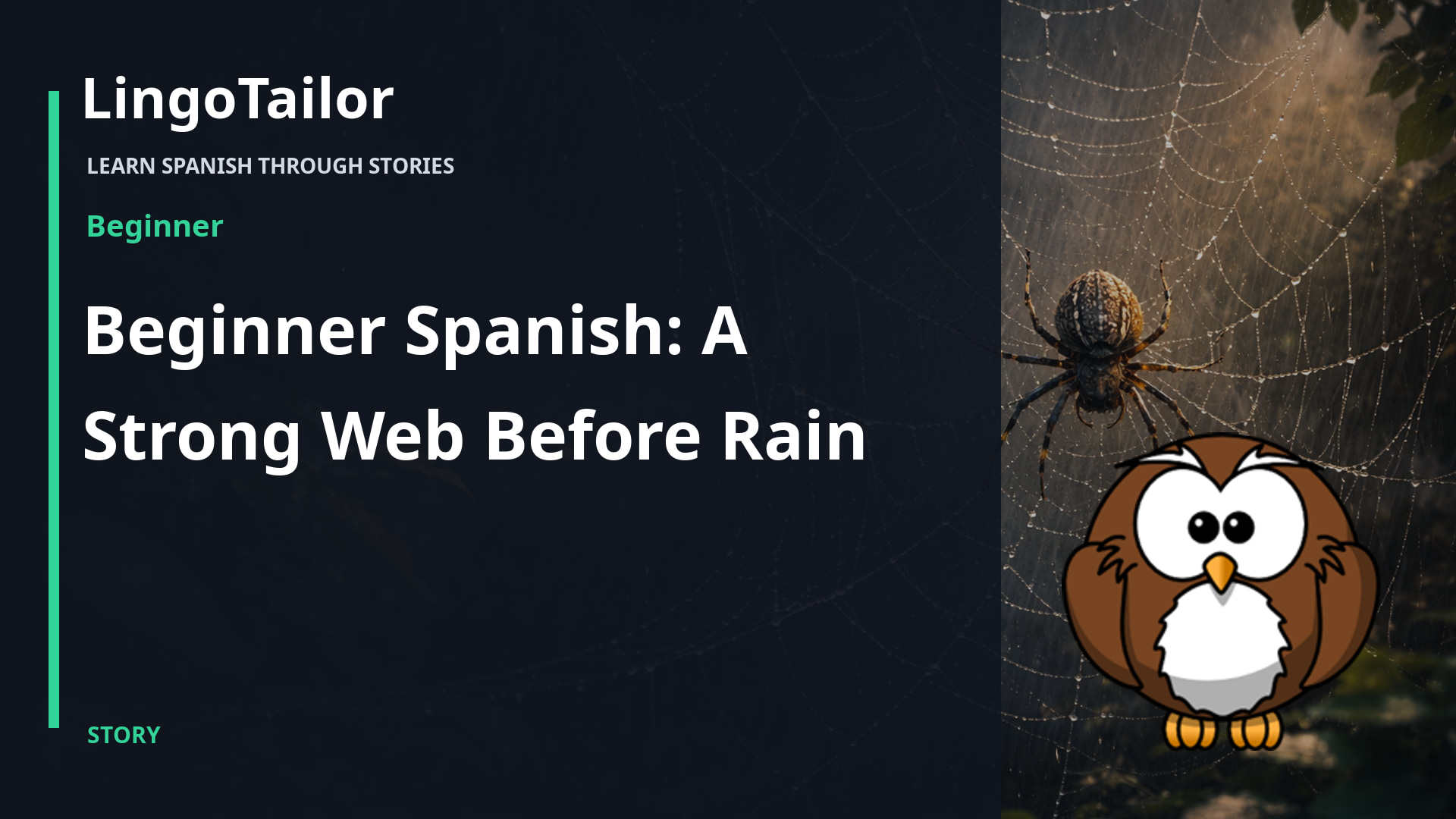
An illustrative example based on facts about garden spiders: a spider builds a silk web before rain, repairs some damage in the morning, and continues waiting for insects. Learners practice four useful Spanish expressions for time, web-building, and damage.
Story context, sources & AI disclosure
An illustrative example based on facts about garden spiders: a spider builds a silk web before rain, repairs some damage in the morning, and continues waiting for insects. Learners practice four useful Spanish expressions for time, web-building, and damage. Create your own personalized learning podcast Want a podcast built around your interests and learning needs? Sign up for LingoTailor and create a personalized podcast that evolves as you learn. Register at https://lingotailor.clipiti.com This episode uses AI-generated content and audio and was published automatically, without human review. Language explanations and factual content may contain mistakes.
Account required. A limited lifetime trial is available; your allowance is shown before generation.
Transcript & learning notes
Follow along, pause, and replay the Spanish passages.
EnglishWelcome to LingoTailor, where you learn Spanish through stories. First, you'll hear the story in English to understand the context. Then you'll hear it in Spanish, learn useful vocabulary, and listen to the Spanish story again. Today's story is: A Strong Web Before Rain.
EnglishHere is the English version.
EnglishThis is an illustrative example based on facts about garden spiders, not a report about one documented spider. At dusk, a garden spider finds a place between two plants. It needs a web to catch small insects. Before the rain, it weaves its web from silk. First, it places long threads. Then it adds curved, sticky threads. The web is strong, but it is not unbreakable. During the night, light rain falls. Some drops stay on the web, and some threads break. In the morning, the spider stays in the same place. It repairs the web with more silk and waits for insects again. A spider may repair a damaged web, although spiders do not all build or repair webs in the same way.
EnglishNow, hear the same complete story in Spanish.
EspañolAhora, la versión en español.
EspañolEste es un ejemplo ilustrativo basado en hechos sobre las arañas de jardín, no un informe sobre una araña documentada. Al anochecer, una araña de jardín encuentra un lugar entre dos plantas. Necesita una red para atrapar insectos pequeños. Antes de la lluvia, teje su red con seda. Primero, coloca hilos largos. Después, añade hilos curvos y pegajosos. La red es fuerte, pero no es indestructible. Durante la noche, cae una lluvia suave. Algunas gotas quedan en la red y algunos hilos se rompen. Por la mañana, la araña permanece en el mismo lugar. Repara la red con más seda y vuelve a esperar insectos. Una araña puede reparar una red dañada, aunque no todas las arañas construyen o reparan sus redes de la misma manera.
EnglishHere are four useful expressions from the story.
Españolantes de la lluvia
EnglishUse this expression to say that something happens earlier than the rain.
EspañolCerramos la ventana antes de la lluvia.
Españolteje su red
EnglishThis describes a spider making its web by weaving silk.
EspañolLa araña teje su red en el jardín.
Españolpor la mañana
EnglishUse this expression to say when something happens in the morning.
EspañolPor la mañana, bebo agua.
Españolalgunos hilos se rompen
EnglishThis says that some threads break; it describes an event that happens to the threads.
EspañolCon el viento, algunos hilos se rompen.
EnglishListen once more to the Spanish story.
EspañolEste es un ejemplo ilustrativo basado en hechos sobre las arañas de jardín, no un informe sobre una araña documentada. Al anochecer, una araña de jardín encuentra un lugar entre dos plantas. Necesita una red para atrapar insectos pequeños. Antes de la lluvia, teje su red con seda. Primero, coloca hilos largos. Después, añade hilos curvos y pegajosos. La red es fuerte, pero no es indestructible. Durante la noche, cae una lluvia suave. Algunas gotas quedan en la red y algunos hilos se rompen. Por la mañana, la araña permanece en el mismo lugar. Repara la red con más seda y vuelve a esperar insectos. Una araña puede reparar una red dañada, aunque no todas las arañas construyen o reparan sus redes de la misma manera.
EnglishMake your learning personal with LingoTailor: podcasts adapted to your interests, level, and progress. Practice speaking with ChatGPT, get feedback, and shape your next episode. Follow the link in the description to get started. Subscribe now so you never miss a new episode. Don't just listen to a new language. Start speaking it.