
Intermediate · story · Level 3 · 4:11
Intermediate Spanish: Persephone and the Seasons
Watch this episode
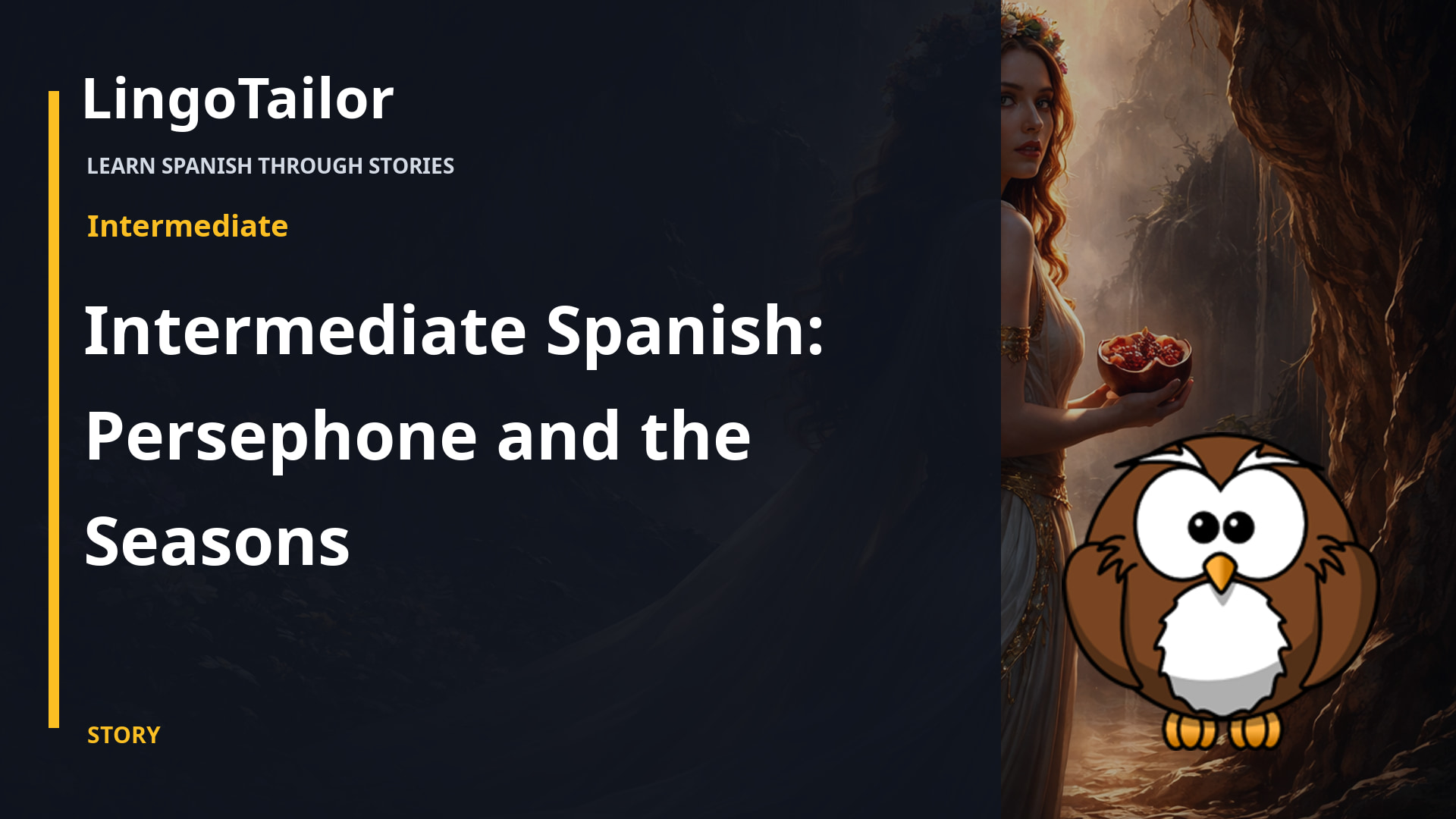
This lesson presents a traditional Greek myth retelling, based on accounts of Persephone, Demeter, and the pomegranate seeds. Learners practice framing tradition, describing an emotional reaction, and signaling an outcome in Spanish.
Story context, sources & AI disclosure
This lesson presents a traditional Greek myth retelling, based on accounts of Persephone, Demeter, and the pomegranate seeds. Learners practice framing tradition, describing an emotional reaction, and signaling an outcome in Spanish. Create your own personalized learning podcast Want a podcast built around your interests and learning needs? Sign up for LingoTailor and create a personalized podcast that evolves as you learn. Register at https://lingotailor.clipiti.com This episode uses AI-generated content and audio and was published automatically, without human review. Language explanations and factual content may contain mistakes.
Account required. A limited lifetime trial is available; your allowance is shown before generation.
Transcript & learning notes
Follow along, pause, and replay the Spanish passages.
EnglishWelcome to LingoTailor, where you learn Spanish through stories. First, you'll hear the story in English to understand the context. Then you'll hear it in Spanish, learn useful vocabulary, and listen to the Spanish story again. Today's story is: Persephone and the Seasons.
EnglishEnglish version.
EnglishAccording to tradition, Persephone, daughter of Demeter, was gathering flowers when Hades carried her to the underworld. Demeter searched everywhere. When she discovered where Persephone was, she began to cry, and plants stopped growing. Zeus sent Hermes to negotiate her return. In this traditional version, Persephone could leave, but she had eaten six pomegranate seeds; because of that, she had to return to the underworld for six months each year. She would spend the other six months with her mother. In the end, Demeter accepted the arrangement because she recovered her daughter for part of the year. When Persephone was with her, the earth bloomed; when Persephone left, Demeter grieved and growth stopped. Thus, the traditional myth explains the changing seasons through the separation and reunion of mother and daughter.
EnglishNow hear the Spanish version.
EspañolVersión en español.
EspañolSegún la tradición, Perséfone, hija de Deméter, recogía flores cuando Hades la llevó al inframundo. Deméter la buscó por todas partes. Cuando descubrió dónde estaba Perséfone, se echó a llorar, y las plantas dejaron de crecer. Zeus envió a Hermes para negociar su regreso. En esta versión tradicional, Perséfone podía marcharse, pero había comido seis semillas de granada; por eso, debía volver al inframundo durante seis meses cada año. Pasaría los otros seis meses con su madre. Al final, Deméter aceptó el acuerdo porque recuperaba a su hija durante una parte del año. Cuando Perséfone estaba con ella, la tierra florecía; cuando Perséfone se marchaba, Deméter se afligía y el crecimiento se detenía. Así, el mito tradicional explica el cambio de las estaciones mediante la separación y el reencuentro de madre e hija.
EnglishHere are three expressions from the story.
EspañolSegún la tradición
EnglishUse this expression to show that an idea comes from a traditional account rather than from established fact.
EspañolSegún la tradición, el héroe protegía a su pueblo.
Españolse echó a llorar
EnglishThis describes someone suddenly beginning to cry, especially in response to strong emotion or news.
EspañolAl enterarse de la noticia, se echó a llorar.
Españolal final
EnglishUse this phrase to introduce the outcome or concluding event of a story.
EspañolAl final, aceptaron el acuerdo.
EnglishNow listen to the Spanish story again.
EspañolSegún la tradición, Perséfone, hija de Deméter, recogía flores cuando Hades la llevó al inframundo. Deméter la buscó por todas partes. Cuando descubrió dónde estaba Perséfone, se echó a llorar, y las plantas dejaron de crecer. Zeus envió a Hermes para negociar su regreso. En esta versión tradicional, Perséfone podía marcharse, pero había comido seis semillas de granada; por eso, debía volver al inframundo durante seis meses cada año. Pasaría los otros seis meses con su madre. Al final, Deméter aceptó el acuerdo porque recuperaba a su hija durante una parte del año. Cuando Perséfone estaba con ella, la tierra florecía; cuando Perséfone se marchaba, Deméter se afligía y el crecimiento se detenía. Así, el mito tradicional explica el cambio de las estaciones mediante la separación y el reencuentro de madre e hija.
EnglishMake your learning personal with LingoTailor: podcasts adapted to your interests, level, and progress. Practice speaking with ChatGPT, get feedback, and shape your next episode. Follow the link in the description to get started. Subscribe now so you never miss a new episode. Don't just listen to a new language. Start speaking it.