
story · Level 3 · 6 min
Intermediate Spanish: Pompeii Under Ash
Watch this episode
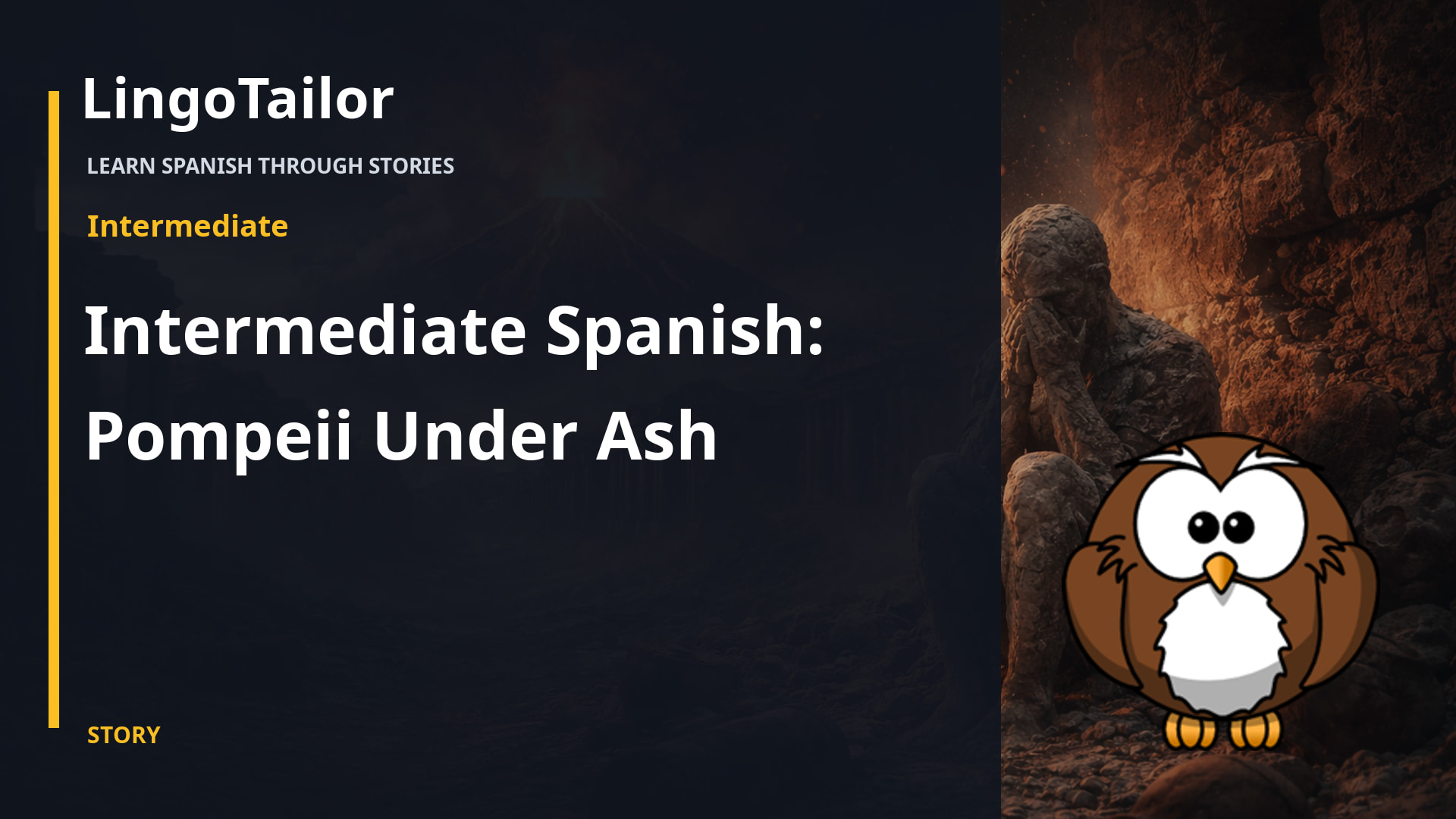
A factual account of the 79 CE eruption of Mount Vesuvius, the destruction and burial of Pompeii, and the volcanic deposits that helped preserve evidence of daily Roman life. Create your own personalized learning podcast Want a podcast built around your interests and learning needs? Sign up for LingoTailor and create a personalized podcast that evolves as you learn. Register at https://lingotailor.clipiti.com This episode uses AI-generated content and audio and was published automatically, without human review. Language explanations and factual content may contain mistakes.
Transcript & learning notes
Follow along, pause, and replay the Spanish passages.
EnglishWelcome to LingoTailor, where you learn Spanish through stories. First, you'll hear the story in English to understand the context. Then you'll hear it in Spanish, learn useful vocabulary, and listen to the Spanish story again. Today's story is: Pompeii Under Ash.
EnglishHere is the English version.
EnglishIn 79 CE, Mount Vesuvius erupted near Pompeii, a Roman city. The exact day remains debated: Pliny the Younger described the disaster, but surviving evidence has led scholars to propose different dates. First, pumice and ash fell for hours, damaging roofs and blocking streets. Some residents escaped, while others stayed or returned for their belongings. Later, hot, fast-moving currents of gas and volcanic material, often called pyroclastic flows, reached the city. Pompeii was buried under layers of ash and pumice, and many people died, although the exact number is unknown. Over time, volcanic deposits helped preserve buildings, objects, and spaces left by decomposed bodies; archaeologists later used those spaces to make casts. Unlike an ordinary ruin, the city preserved details of daily life. However, it was not untouched: heat, pressure, and moisture also damaged many materials.
EnglishNow hear the same account in Spanish.
EspañolAquí está la versión en español.
EspañolEn el año 79 de nuestra era, el Vesubio entró en erupción cerca de Pompeya, una ciudad romana. La fecha exacta sigue siendo debatida: Plinio el Joven describió el desastre, pero las pruebas conservadas han llevado a los especialistas a proponer fechas diferentes. Primero, la piedra pómez y la ceniza cayeron durante horas, dañando los tejados y bloqueando las calles. Algunos habitantes huyeron, mientras otros se quedaron o regresaron por sus pertenencias. Después, corrientes calientes y rápidas de gas y material volcánico, llamadas flujos piroclásticos, llegaron a la ciudad. Pompeya quedó enterrada bajo capas de ceniza y piedra pómez, y muchas personas murieron, aunque se desconoce la cifra exacta. Con el paso del tiempo, los depósitos volcánicos ayudaron a conservar edificios, objetos y huecos dejados por cuerpos descompuestos; más tarde, los arqueólogos usaron esos huecos para hacer moldes. A diferencia de una ruina común, la ciudad conservó detalles de la vida cotidiana. Sin embargo, no quedó intacta: el calor, la presión y la humedad también dañaron muchos materiales.
EnglishNext, we will review four useful expressions.
Españolquedó enterrada bajo
EnglishUse this expression to say that something ended up covered by a layer or substance. It describes a completed change of condition.
EspañolLa antigua carretera quedó enterrada bajo la arena.
Españolcon el paso del tiempo
EnglishUse this time expression to describe a gradual change that happens as time passes.
EspañolCon el paso del tiempo, la pintura perdió su color.
Española diferencia de
EnglishUse this expression to contrast one person or thing with another. It is normally followed by a noun or noun phrase.
EspañolA diferencia de su hermano, Marta prefiere trabajar por la mañana.
Españolsin embargo
EnglishUse this connector to introduce a contrast with the previous statement. It is similar to “however.”
EspañolEl camino era largo; sin embargo, llegaron antes del anochecer.
EnglishNow hear the Spanish account again.
EspañolEn el año 79 de nuestra era, el Vesubio entró en erupción cerca de Pompeya, una ciudad romana. La fecha exacta sigue siendo debatida: Plinio el Joven describió el desastre, pero las pruebas conservadas han llevado a los especialistas a proponer fechas diferentes. Primero, la piedra pómez y la ceniza cayeron durante horas, dañando los tejados y bloqueando las calles. Algunos habitantes huyeron, mientras otros se quedaron o regresaron por sus pertenencias. Después, corrientes calientes y rápidas de gas y material volcánico, llamadas flujos piroclásticos, llegaron a la ciudad. Pompeya quedó enterrada bajo capas de ceniza y piedra pómez, y muchas personas murieron, aunque se desconoce la cifra exacta. Con el paso del tiempo, los depósitos volcánicos ayudaron a conservar edificios, objetos y huecos dejados por cuerpos descompuestos; más tarde, los arqueólogos usaron esos huecos para hacer moldes. A diferencia de una ruina común, la ciudad conservó detalles de la vida cotidiana. Sin embargo, no quedó intacta: el calor, la presión y la humedad también dañaron muchos materiales.
EnglishMake your learning personal with LingoTailor: podcasts adapted to your interests, level, and progress. Practice speaking with ChatGPT, get feedback, and shape your next episode. Follow the link in the description to get started. Subscribe now so you never miss a new episode. Don't just listen to a new language. Start speaking it.